
Commonly Utilised Tests
What Is Functional Testing?
Functional testing helps identify factors that may be contributing to symptoms, allowing for a more targeted and informed treatment approach.. The information gathered can guide more personalised recommendations and provide valuable health benchmarks over time.
Depending on the test selected, functional testing may provide insight into:
• Fatigue, energy production and recovery
• Mood, stress resilience and emotional wellbeing
• Focus, concentration and cognitive performance
• Children's health, development and learning
• Digestive symptoms and gut health
• Skin health and inflammation
• Nutrient status and absorption
• Hormone health and metabolism
• Immune resilience and recovery
• Factors that may be contributing to ongoing or unexplained symptoms
For many people, testing helps connect the dots between seemingly unrelated symptoms, providing a clearer understanding of the factors influencing their health and wellbeing.
Testing is recommended on an individual basis and is not required for every client. All testing is completed through independent laboratories, with results reviewed and discussed in detail during your consultation.
Microbiome Testing
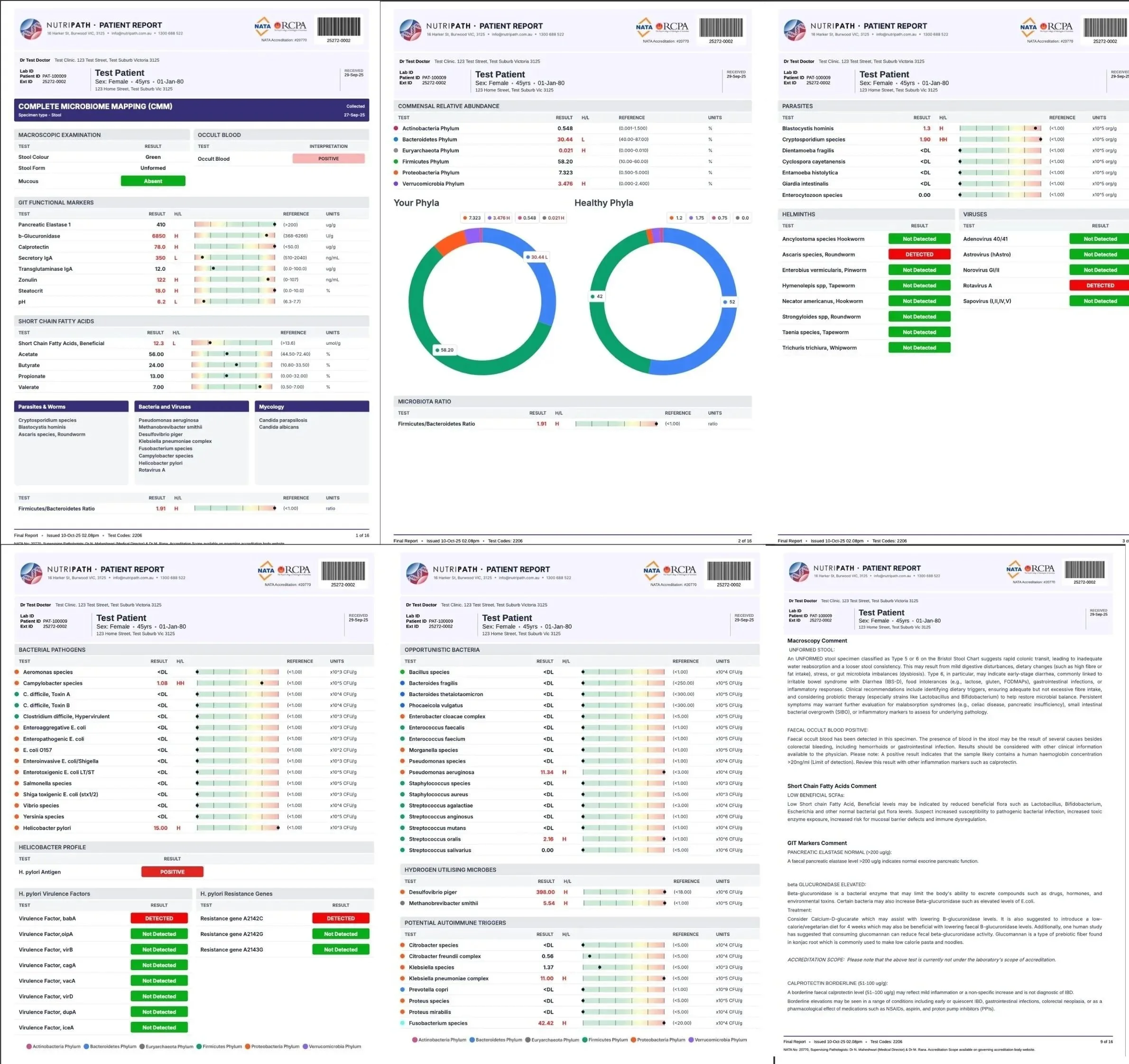
The gut microbiome can impact all aspects of health. Emerging research continues to highlight the connection between gut health and areas such as mood, behaviour, concentration, cognitive function, inflammation, skin health, immunity, stress resilience and energy levels. Microbiome testing may provide additional insight into: • Digestive symptoms including bloating, constipation and diarrhoea • Fatigue, energy production and overall wellbeing • Mood, concentration and focus • Behavioural concerns in children • Nutrient absorption and assimilation • Inflammation and immune function • Skin concerns such as acne, eczema and rosacea • Gut microbiome balance and diversity • Other factors that may be contributing to ongoing symptoms This test assesses beneficial bacteria, opportunistic microbes, parasites, yeast, digestive markers, inflammatory markers and gut barrier function to help build a more complete picture of digestive and overall health.
Report Snapshot:
Hair Mineral Analysis Testings
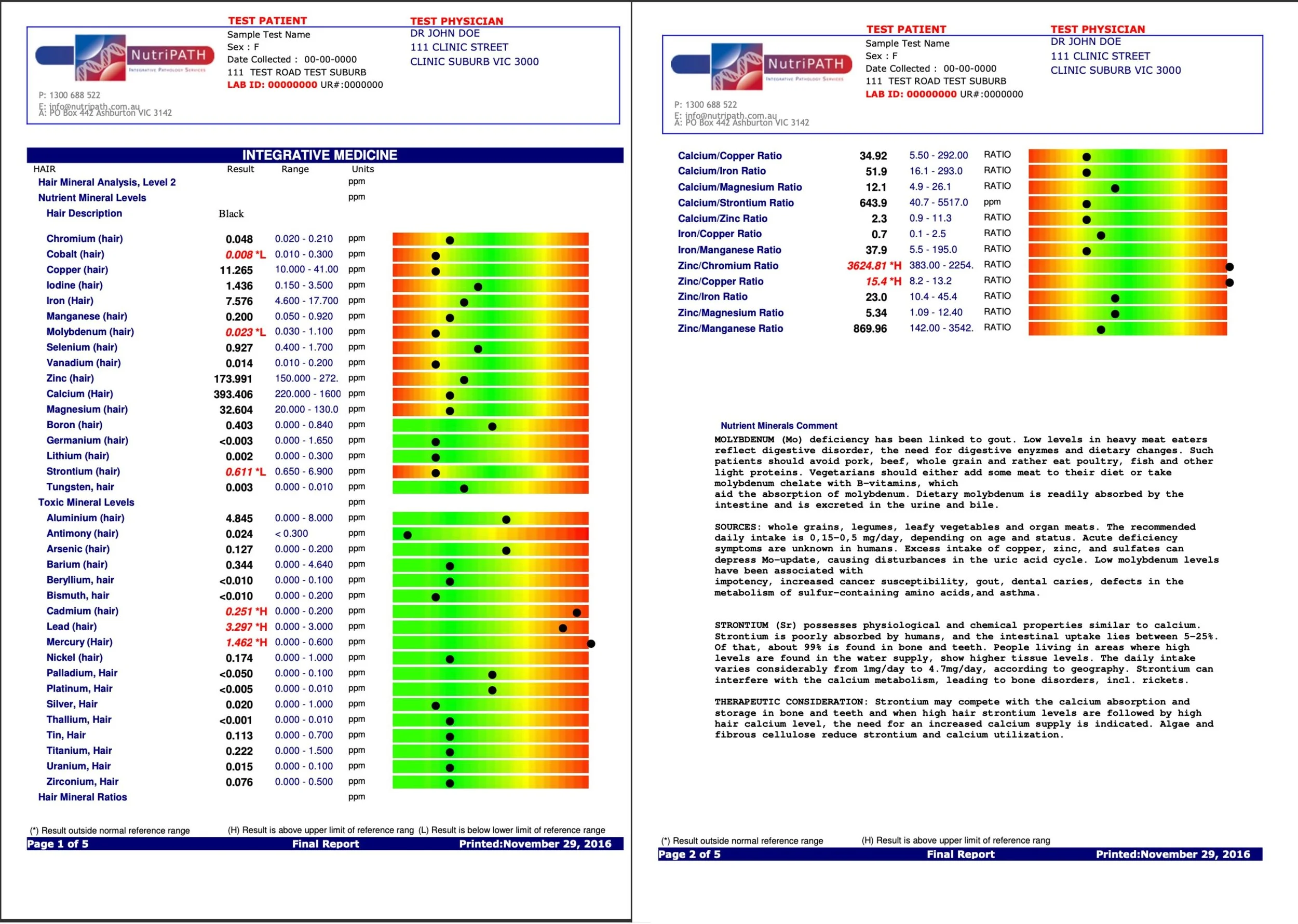
Hair Tissue Mineral Analysis (HTMA) is a non-invasive test that uses a small hair sample to assess mineral balance and exposure to certain heavy metals over time. It is particularly well suited to children or individuals who prefer to avoid blood testing. Mineral balance plays a vital role in energy, mood, focus, stress resilience and overall wellbeing. HTMA can help uncover underlying factors that may be impacting how your body functions and responds to nutrition, providing valuable insight to guide a more personalised approach to health. May provide additional insight into: • Fatigue and low energy • Stress resilience and nervous system function • Mood, focus and concentration • Mineral deficiencies and imbalances • Thyroid health • Detoxification pathways • Heavy metal exposure • Skin, hair and nail health • Immune function and overall wellbeing • Other factors that may be contributing to ongoing symptoms A small sample of hair is analysed to assess key minerals and trace elements involved in energy production, metabolism, hormone regulation and overall health. HTMA may be particularly useful for those experiencing ongoing symptoms, seeking a deeper understanding of their health, or wanting to optimise their nutrition and supplementation strategy.
Report Snapshot
IncludedInitial Consultation
Brainstorming Session
Collaborative Planning
Customized Deliverables
Multiple Feedback Rounds
Actionable Recommendations
Post-Project Support
myDNA Comprehensive Health Report - Genetic, Longevity & NutrigenomicsTesting
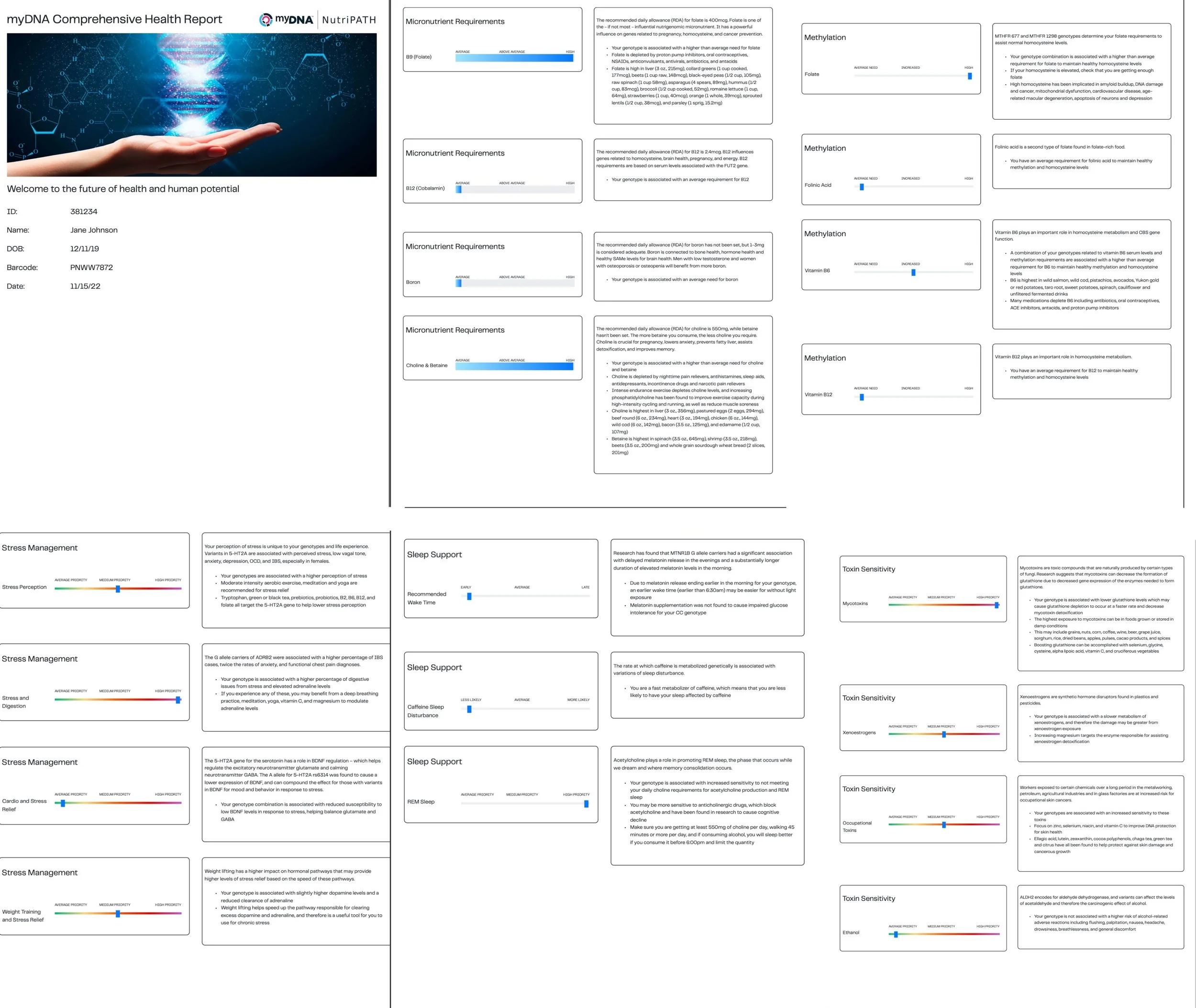
Have you ever wondered why some people seem naturally resilient to stress, while others experience fatigue, brain fog or burnout despite doing all the right things? Or why a supplement works well for one person but not another? Your genes may hold some of the answers. Genetic and nutrigenomic testing provides insight into how your body responds to nutrition, stress, exercise and environmental factors. The report analyses over 90 genes involved in key areas of health, helping to identify both strengths and areas that may benefit from additional support. May provide additional insight into: • Energy production and fatigue • Digestion and nutrient metabolism / areas of support • Methylation pathways and B-vitamin requirements • Mood, focus, neurotransmitter production and cognitive performance • Stress resilience and nervous system function • Hormone metabolism • Inflammation and immune function • Detoxification pathways • Exercise recovery and athletic performance • DNA protection and repair • Other factors that may be influencing your overall health and wellbeing Methylation is a key process involved in neurotransmitter production, detoxification, hormone metabolism, energy production and cellular repair. Understanding your genetic methylation profile may help explain differences in nutrient requirements, stress tolerance and overall health function.
Report Snapshot (100+ pages of insights)
“We were focused on my son's behaviour, but never considered that his gut health could be playing a role. I had no idea it could have such a significant impact on his energy, focus and ability to concentrate at school.”
– Former Client